


About
Education: University of California, San Diego (2024–2028)
Research Interests: binary stellar evolution, binary stellar population synthesis codes, gravitational wave astronomy
Publications: arXiv:2607.26147
Projects
Rapid Stellar Population Synthesis Code Differences
Investigating differences in rapid stellar population synthesis using COMPAS and StarTrack.
See MoreCIERA REU: Neutron Star Kick Velocity Distribution
Impact of binary systems on observed pulsar velocity distribution.
See MorePosters
AAS Poster Presentation
MURALS Poster Presentation
CU*iP Poster Presentation
Talks
Summer Research Conference (URS)
GravNu Lightning Talk
Programs and Awards
CIERA REU Program
Undergraduate Research Scholarship: Robert C Dynes and An Parode Dynes Research Scholarship for Physics
TRELS Program
Rapid Stellar Population Synthesis Code Differences
← Back to ResearchCIERA REU: Neutron Star Kick Velocity Distribution
During the core-collapse of massive stars, asymmetries in the supernova explosion can eject the newly formed compact object, such as a neutron star, in what is known as a supernova kick. The natal kick velocity of neutron stars is found to follow a distribution that can be observed through the velocity distribution of pulsars.
For binary systems, however, the natal kick velocity distribution is not the same as what would be observed. The conditions of the binary system immediately before the progenitor's core-collapse affect the neutron star's final velocity.
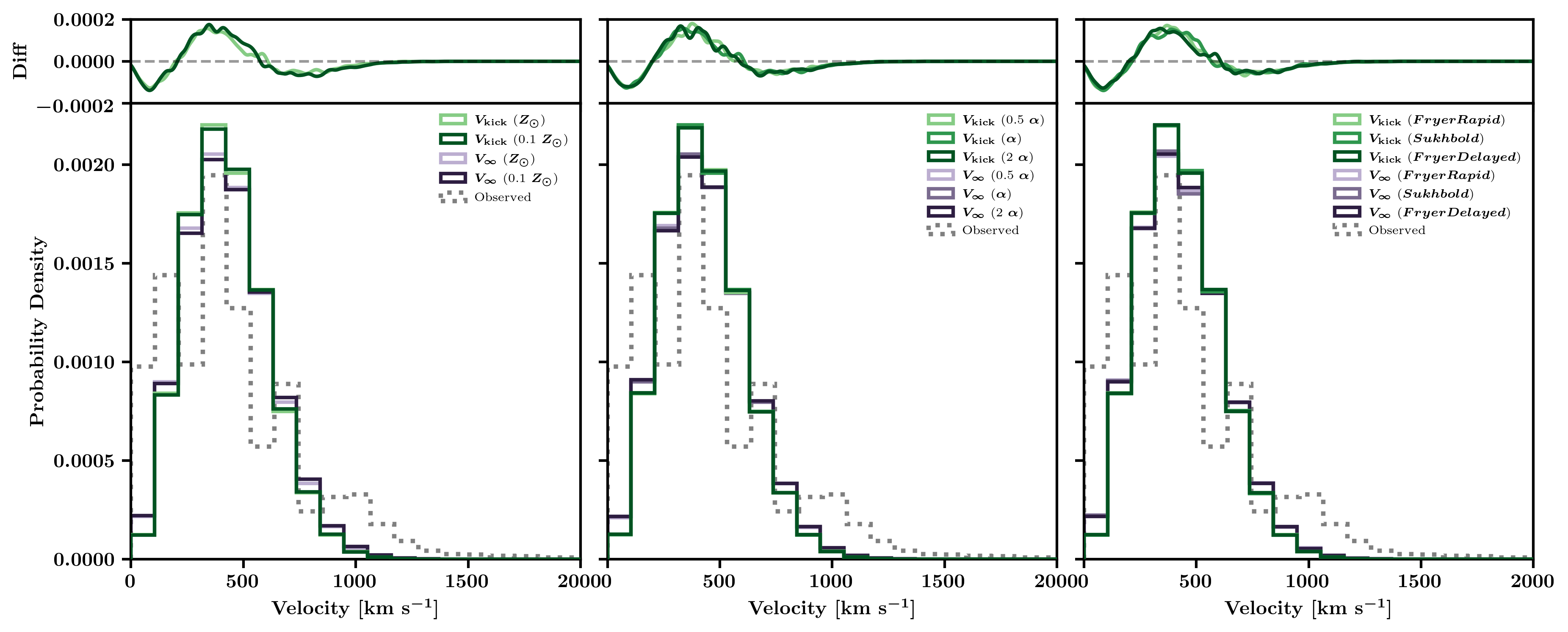
Using POSYDON to simulate varying values of σ for the Maxwellian distribution from which natal kicks are drawn, we use Normalizing Flows to create a model that generates velocity distributions from binaries for any σ. Hierarchical Bayesian Inference is then used to determine the σ and fractional contribution of binary and Maxwellian distributions that best fit observational data.
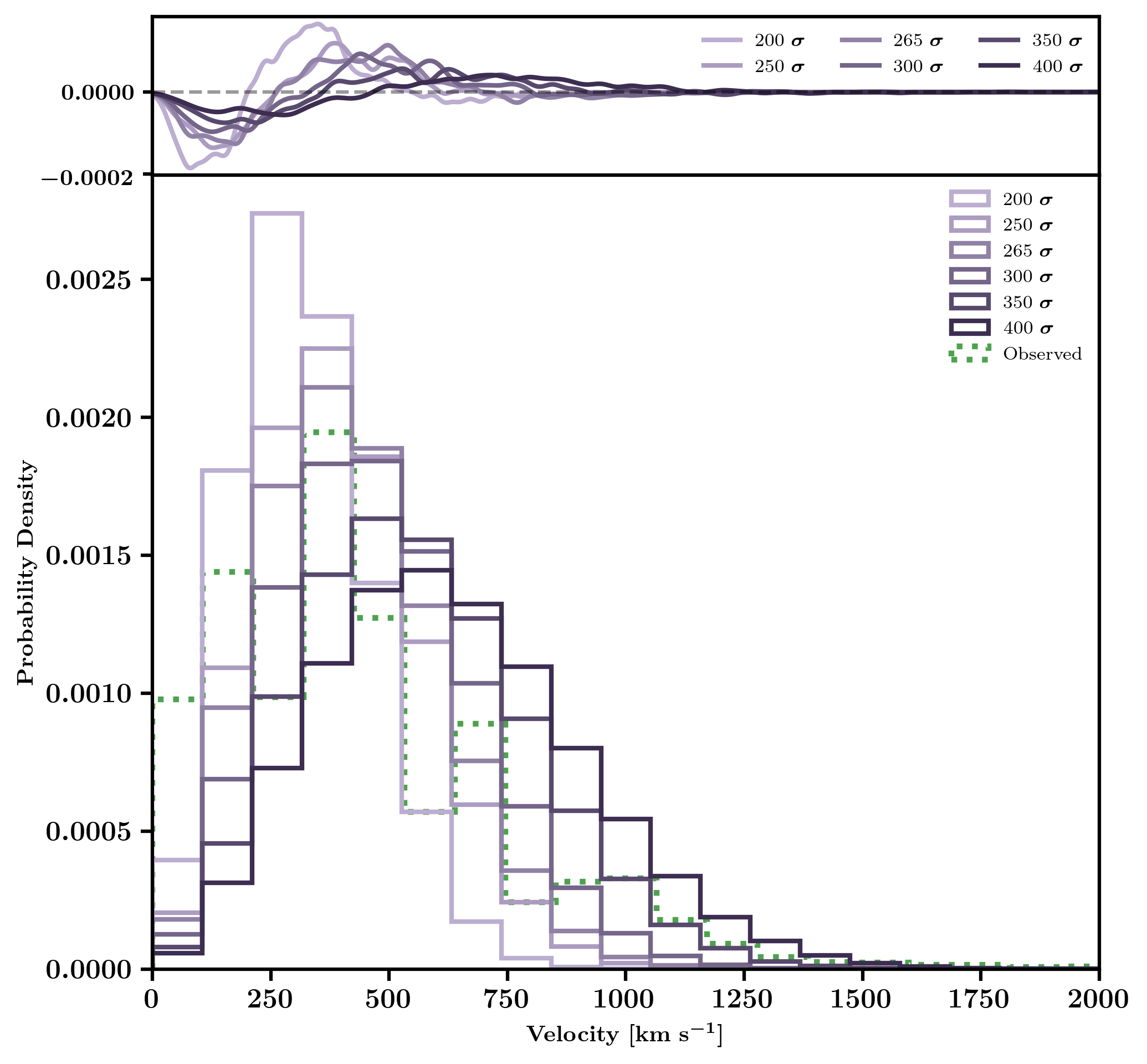
We find that σ = 265 km/s and f = 0.55 provide the best fit to observations, with a Bayes factor of 1.25 relative to a single Maxwellian. The best fit of the binary-only model compared to a single Maxwellian has a Bayes factor of 1.48.
These results indicate that the inclusion of binaries provides little evidence for a positive correlation compared to single stars, and demonstrate the need for more observations to reach a more conclusive result.
← Back to ResearchProjects
VIMES: Visualization of Massive Evolving Stars
Creates an animation of the evolution of any binary system in COMPAS
Outreach
AstroReach
Ran a coding workshop for high school students as part of the AstroReach Program.
SPS
Society of Physics Students (SPS) Outreach Board Member
Contact
Email: layambinu@gmail.com